
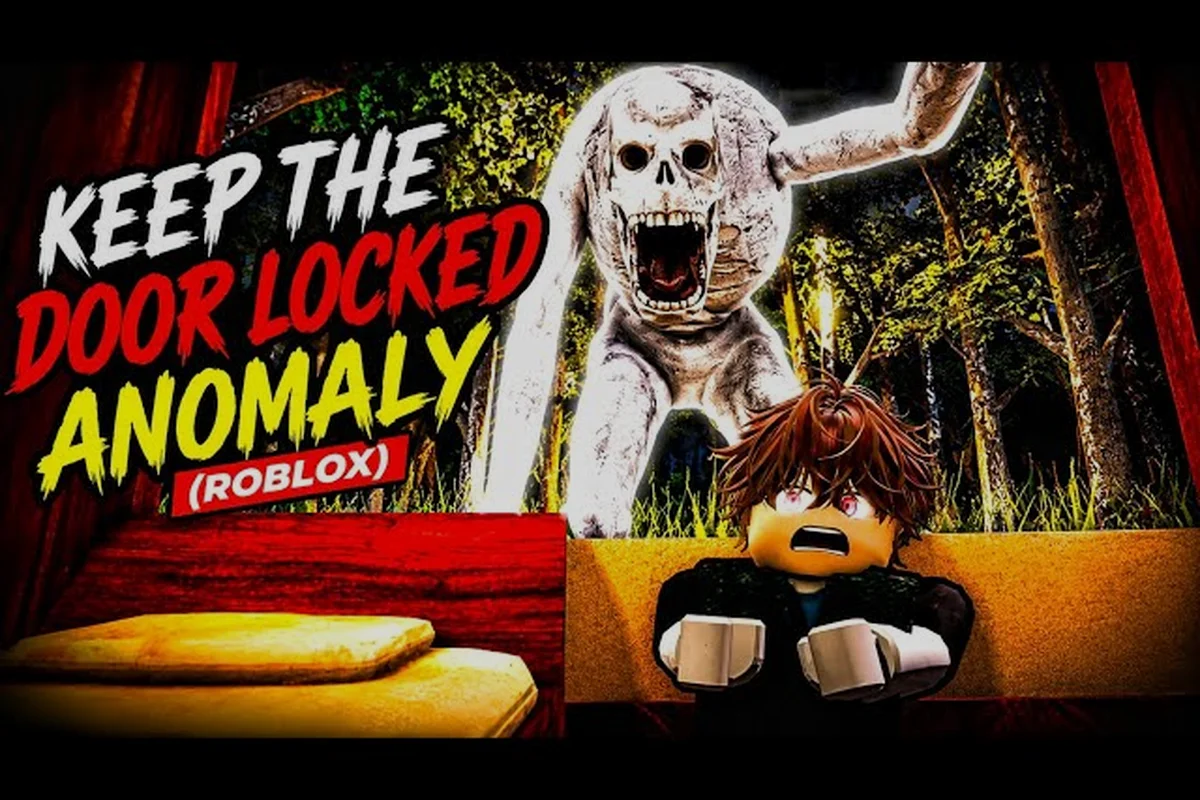
You're alone in a hotel room after midnight, and every knock could be your last. Keep the door locked fake visitors are the core threat in this Roblox horror experience, and knowing how to identify them before opening is the difference between survival and a respawn screen. The game's premise is simple but brutal: strangers knock, some need help, some are lying, and one wrong decision ends your run — which is why mastering anomaly detection matters more than any other skill.
The game launched on May 28, 2026, by developer Hotel Room Services (KivC) and has already pulled in 4.3M+ visits with 10K+ players online at peak hours, according to the official Keep the Door Locked Roblox page. This guide breaks down every known fake visitor pattern so you can answer the door with confidence, not fear.
Understanding Keep the Door Locked Fake Visitors and the Anomaly System
The entire game revolves around one question: is this visitor real or fake? Keep the door locked fake visitors are anomalies that mimic human behavior but fail to match the physical reality of your hotel room. The game gives you tools — cameras, audio monitors, and rulebooks — but the anomalies exploit gaps in all three systems.
According to community data shared across Roblox forums and YouTube walkthroughs, anomalies are fake visitors with story details that don't match the room. The game tests whether you notice contradictions between what a visitor claims and what your cameras actually show.
Here's what makes this system unique compared to other Roblox horror titles: the door's integrity meter directly ties to your survival, forcing you to balance repair time against monster proximity. Players quickly learn that over-repairing wastes precious flashlight battery, while ignoring cracks invites a fatal breach. The community often debates whether the audio cue for a full lock is a blessing or a trap.
-
Physical contradictions: A visitor mentions oven smoke when there's no oven in the room
-
Environmental mismatches: A faucet is described as leaking, but your camera shows dry fixtures
-
Visual inconsistencies: A cat's color changes between sentences during the same conversation
-
Presence-based anomalies: Figures that appear only on night vision or CCTV feeds
The game tracks your decision accuracy across multiple nights. Each correct identification earns points, while each wrong door opening — whether you let in a fake or reject a real person — has consequences. Community reports suggest that three consecutive mistakes trigger a harder difficulty curve with more aggressive anomalies.
How the Detection Loop Works
Each visitor interaction follows the same loop. You hear a knock, check the peephole or camera feed, listen to their story, and cross-reference their claims against the room's actual state. The game deliberately creates pressure by limiting how long you can observe before the visitor grows impatient.
The core skill is building a mental checklist and running it every single time because the game randomizes which anomaly type appears. You cannot rely on memorizing a single pattern since the developer rotates the anomaly pool with each patch, based on community testing.
Anomaly detection requires checking three zones: the physical room state, the visitor's appearance, and their audio signature. Most players fail because they focus on only one zone while the fake visitor hides its tells in another. For example, a shifted chair or a missing shadow often pairs with a subtle voice crack, so scanning all three in quick succession—rather than lingering on one—dramatically boosts your survival odds.
Critical Physical Anomalies: What Your Cameras Reveal
The most reliable way to catch keep the door locked fake visitors is verifying their story against your camera feeds. Every room has fixed fixtures, and anomalies often reference things that don't exist in your specific layout. This inconsistency is the foundation of the game's real vs fake logic.
The game's camera system includes standard CCTV, night vision, and thermal modes — though thermal unlocks later. Each mode reveals different anomaly layers, according to player reports from full walkthroughs like this Keep the Door Locked anomaly gameplay video. Switching to night vision early can help spot subtle distortions in door frames, while thermal is often saved for late-game entities that emit heat signatures, making it a key tool for final-floor survival.
Here are the documented physical anomalies reported by the community: these include flickering lights, doors that creak without being touched, and occasional shadowy figures at the hallway’s end. Players often note that these signs precede a door-lock failure, so staying alert and checking the nearest lock before moving is a common survival tactic.
-
Ghostly figures visible only on night vision when the standard camera shows an empty hallway
-
Faceless shapes that appear on CCTV but vanish when you switch to the peephole
-
Distorted height proportions where the visitor's head-to-body ratio shifts between camera angles
-
Room state changes where objects move between camera checks without any sound
The game uses environmental storytelling to hide these tells. A visitor might claim they saw smoke from your kitchen, but your room has no kitchen — that's an automatic rejection. The key is knowing your room's baseline before the first knock.
Physical Anomaly Reference Table
| Anomaly Type | Camera Mode | Typical Tells | Confidence Level |
|---|---|---|---|
| Ghost Visitor | Night Vision only | Visible on NV, absent on normal | High — instant reject |
| Faceless Entity | CCTV only | No facial features at any angle | High — instant reject |
| Height Distortion | All modes | Proportions shift between angles | Medium — verify twice |
| Object Mover | Standard | Items relocate between checks | Medium — check baseline |
| Color Shifter | Peephole | Pet/appearance changes mid-story | High — instant reject |
Players report that ghost visitors appear most frequently on night 3 and beyond, which matches the game's difficulty curve. Early nights focus on physical contradictions, while later nights introduce the harder-to-spot camera-only anomalies. This shift forces you to split attention between door checks and monitor sweeps, as missing a single flicker often costs a full run.
Voice and Audio Anomalies: When Sound Gives Them Away
Not all keep the door locked fake visitors reveal themselves visually. Some pass every visual check but fail on audio, which is why you should never mute the game sound. The audio system is a legitimate gameplay mechanic, not just atmosphere.
The most documented audio anomaly is the voice flip, where a visitor's tone shifts between normal speech and a demonic gravelly growl mid-sentence. This happens subtly — often on a single word — and players who play without sound miss it entirely, according to community reports from the Keep the Door Locked full walkthrough video.
Other audio-based tells include the subtle creak of the door hinge when a monster brushes past it, the faint shuffle of footsteps on carpet versus tile, and the distinct click of a lock being tested. Players often rely on these cues to time their own lock checks, since visual line-of-sight is limited in tight hallways. Veteran survivors note that a double-click usually signals a failed attempt, not a breach.
-
Background silence mismatches where the hallway should have ambient noise but doesn't
-
Footstep patterns that continue after the visitor stops walking
-
Voice echo that suggests the speaker is closer than the camera shows
-
Double voice where a second, quieter voice trails the primary speaker
Audio anomalies require focused listening, but they are the most reliable tells because they cannot be disguised by visual tricks. In practice, players often mute music and rely on headphone directionality to pinpoint the entity's approach, especially during flickering lights. The game's developer appears to have designed audio as the safety net for observant players, rewarding those who prioritize sound over sight in high-pressure chases.
Audio Anomaly Signs
| Audio Cue | What It Means | Action |
|---|---|---|
| Voice flip to growl | Confirmed anomaly | Do not open |
| Footsteps after stop | Potential ghost visitor | Verify on camera |
| Missing hallway noise | Room state mismatch | Check audio monitor |
| Echo/double voice | Distorted entity | Reject immediately |
Veteran players recommend wearing headphones because the game uses binaural audio cues that are nearly impossible to catch on laptop speakers. The difference between survival and death often comes down to hearing that single demonic word buried in an otherwise polite request.
Keep the Door Locked Real vs Fake: Decision Framework
Once you understand the anomaly types, the real challenge is building a reliable decision framework. Keep the door locked real vs fake decisions often come down to timing — the game gives you limited observation windows, and hesitation can be as dangerous as a wrong call.
The community has developed a three-strike verification method that works across all documented anomaly types. This method requires you to check each of the following before touching the door handle: the peephole, the gap under the door, and the audio cue from the hallway. Players report that skipping any single check often leads to a false positive, especially during late-night rounds when the ambient sound shifts.
-
Visual verification: Cycle through all available camera modes at least once
-
Story verification: Match every detail the visitor mentions against your known room state
-
Audio verification: Listen for voice flips, missing ambiance, or footstep inconsistencies
If all three checks pass, the visitor is likely real. If any single check fails, that's enough to reject — you don't need multiple anomalies to confirm a fake. The game rewards decisive action, and community data suggests that over-verification actually increases your risk because some anomalies adapt to prolonged observation.
Risk Assessment Matrix
| Observation Time | Risk Level | Recommended Action |
|---|---|---|
| Under 5 seconds | High — incomplete data | Reject or extend observation |
| 5-10 seconds | Medium — most tells visible | Make decision based on checklist |
| 10-15 seconds | Low — full verification possible | Safe to act on findings |
| Over 15 seconds | High — anomaly adaptation risk | Decide immediately |
Players who want a deeper breakdown of specific telling behaviors should review our keep the door locked how to spot anomalies guide, which covers advanced detection patterns beyond the basics. The intersection of physical, audio, and behavioral tells creates a detection matrix that improves with practice.
Ghost Visitors and Camera-Only Entities
The creepiest category of keep the door locked fake visitors is the ghost visitor class — entities that exist only in specific camera modes and never appear in normal viewing conditions. These anomalies test whether you're using the full toolset rather than relying on the peephole alone.
Community documentation describes ghost visitors as faceless humanoid shapes that appear on night vision or CCTV but vanish when you switch to standard viewing. They typically knock, deliver a story, and wait — but the story often references room details that don't exist, as if they're reading from a script designed for a different room.
Key characteristics reported by players: the door’s creak timing and the shadow’s flicker pattern are the most reliable tells before a jump scare. Veterans advise listening for the second creak, not the first, to time a safe re-lock. Newer players often panic on the initial sound, wasting their only lock charge.
-
No reflection in any mirror or glass surface within the room
-
Static when moving — their motion appears like corrupted video rather than smooth movement
-
Temperature drop that the player character reacts to with visible breath fog
-
Flickering presence that pulses between visible and invisible on camera feeds
Keep the door locked all fake visitors share one common trait: they always require you to cross-reference at least two information sources. The game never makes it easy by showing an obvious monster at the door — the horror comes from subtle violations of reality.
Ghost Visitor Detection Checklist
- Check night vision mode before answering any knock
- Look for facial features — their absence is a red flag
- Cross-reference CCTV feed against peephole view
- Listen for voice distortion that doesn't match the visual source
- Verify the story details against your room's actual fixtures
For a complete catalog of documented entities, the keep the door locked monster list provides community-compiled data on each known creature type, including their preferred nights and detection difficulty ratings. Players often cross-reference this list when planning which doors to barricade early, as certain anomalies only spawn after specific in-game events. The ratings also help veterans gauge whether to rely on audio cues or visual checks during later nights.
Practical Strategies to Survive Every Night
Surviving in Keep the Door Locked requires more than knowing what the anomalies look like — you need a practical routine that you execute every night without fail. Players who survive consistently follow the same pattern, which the community has codified through extensive testing.
The recommended nightly routine starts before the first knock. Walk your room and memorize the baseline state: where the furniture sits, whether the faucet drips, what the cat looks like. This baseline becomes your reference point for all story verification. Players who skip this step struggle with keep the door locked fake visitors because they have nothing to compare claims against.
Here's the survival routine that experienced players recommend: check the door first, then the windows, and always keep your flashlight off when hiding. Veterans time their crouch-walks between the monster's audio cues, and they never open the closet unless absolutely necessary, since the creak can give away your position.
-
Establish your baseline: Memorize room state before the first visitor
-
Check all cameras first: Cycle through every mode before answering
-
Listen actively: Keep game volume high and distractions off
-
Verify stories immediately: Match claims to your baseline in real time
-
Trust your checklist: If any check fails, reject without second-guessing
The game's difficulty curve means night 1 is forgiving, but by night 5 you're facing keep the door locked creatures that combine multiple anomaly types simultaneously. A ghost visitor might also have a voice flip and an impossible story, requiring all three checks to catch.
Long-Term Progression Tips
-
Track your mistakes: Note which anomaly types you miss to target your weak areas
-
Watch expert gameplay: The INSANE VISITORS anomaly video shows high-level decision-making under pressure
-
Learn the rulebook variations: Each room layout changes which contradictions are possible
-
Practice camera cycling speed: Faster verification reduces adaptation risk
For players who want to understand the underlying detection principles rather than memorize specific patterns, our anomaly tells guide breaks down the universal logic that all fake visitors follow, regardless of which visual form they take. This approach saves time during high-pressure rounds, since recognizing the shared behavioral cues—like unnatural pauses or misaligned animations—lets you react instantly without consulting a checklist. Veterans often note that mastering these tells makes even the rarest variants predictable.
Frequently Asked Questions
What is the fastest way to spot keep the door locked fake visitors?
The fastest reliable method is checking the camera modes before answering any knock. Ghost visitors appear only on night vision, and faceless entities show on CCTV. If the visitor is visible on all modes with consistent proportions and their story matches your room's baseline, they're likely real. This takes about five seconds per knock.
Can keep the door locked fake visitors appear during the day?
No, the game is exclusively set after midnight, and all visitor interactions happen during nighttime hours. The hotel room setting only becomes active once the clock passes midnight, which is when the anomaly spawning system activates. Daytime is not part of the gameplay loop.
Are all fake visitors dangerous if you let them in?
Yes, every confirmed anomaly that gains entry results in a failed run, regardless of which type it is. The game's penalty system treats all fake visitors equally — there is no "harmless" anomaly that you can safely let in. This is why accurate detection matters more than any other survival skill.
Do headphones really help with audio anomaly detection?
Yes, players report significantly higher detection rates for voice flip anomalies when using headphones. The game uses directional audio that places the visitor's voice at specific locations, and the demonic voice overlay is mixed at a lower volume that becomes inaudible on most speakers. Headphones are strongly recommended for serious play.
How often does the developer add new anomaly types?
Community reports indicate the developer rotates the anomaly pool with each major patch, though the core detection mechanics remain consistent. New anomaly types are typically announced through the game's update notes, and players discover additional variants through collective testing in the weeks following each update.