
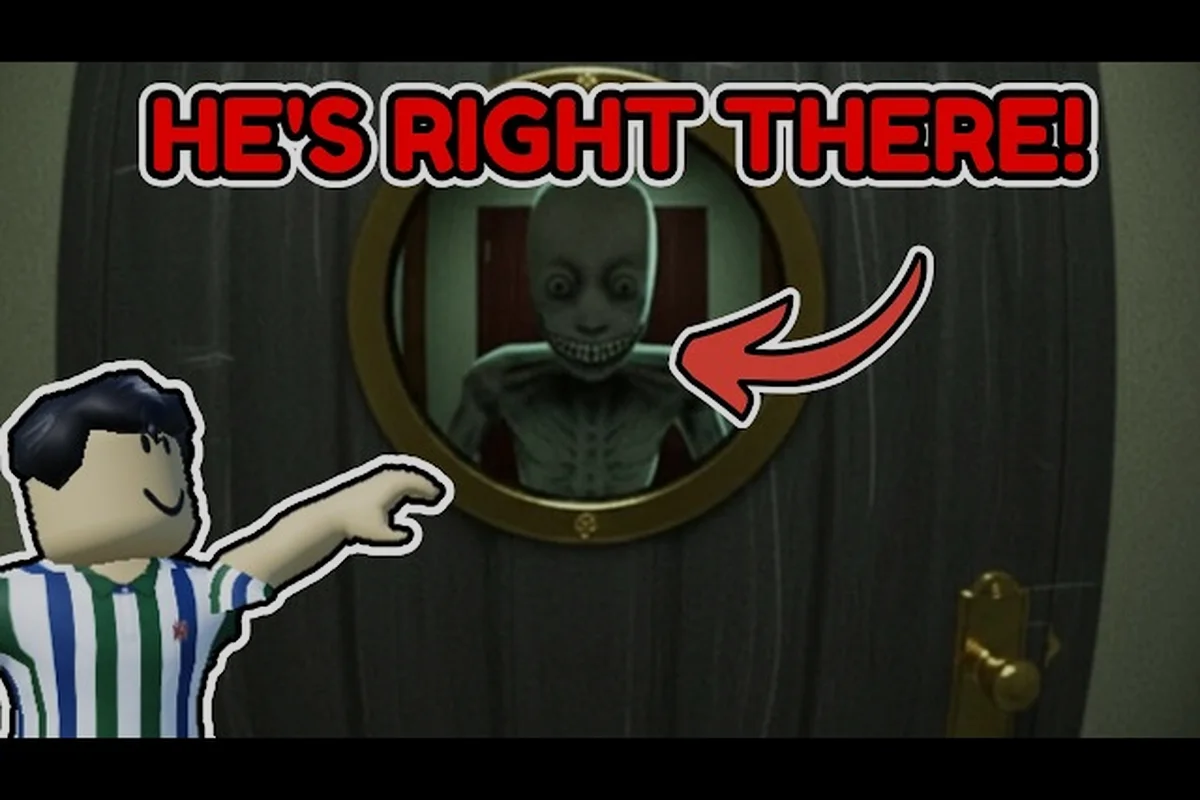
Every knock after midnight in Keep the Door Locked carries a gamble: a real guest needing help, or a creature wearing a human story. Learning how to spot anomalies is the difference between surviving your shift and becoming the hotel's next cautionary tale. With over 4.3 million visits since launch, this Roblox horror experience punishes players who answer without checking. The game's core loop is simple — watch the cameras, listen to the story, and decide who gets inside — but the anomalies hide in the details you almost miss. This guide breaks down the exact tells, camera tricks, and audio cues that veteran players use to identify fakes before they reach the door. Whether you are on night one or shift fifty, these patterns will keep you alive.
Understanding What Counts as an Anomaly
An anomaly in Keep the Door Locked is any detail that contradicts the room's established reality. The game generates a baseline for your hotel room — the appliances, the layout, the ambient sounds — and then creatures arrive with stories that should match that baseline. When they do not, you have found your fake. The challenge is that most anomalies are subtle, requiring you to hold multiple pieces of information in your head while a stranger pleads for entry.
Community reports from players who have logged hundreds of shifts identify three main categories of anomalies. Each category requires a different observation strategy, and knowing which type you are dealing with helps you make faster decisions. For example, visual glitches demand constant camera sweeps, while audio cues are best caught by pausing near vents. Veterans often note that misidentifying a category wastes precious seconds, so memorizing each tell is key to surviving the night shift.
| Anomaly Type | What It Looks Like | Where To Check |
|---|---|---|
| Story Mismatch | Visitor describes an oven, but your room has none | Listen to the full story, cross-check room layout |
| Visual Contradiction | Cat changes color mid-sentence, faucet leaks when it should not | Watch the visitor's environment, not just their face |
| Presence Distortion | Ghostly figures, faceless shapes, distorted height | Use night vision and CCTV views |
The story mismatch category is the most common entry-level anomaly, which is why most beginner guides focus on it. However, the presence distortion type is far more dangerous because it does not rely on dialogue — the creature simply looks wrong. According to community data, players who only listen to stories and never check the cameras miss roughly 40 percent of anomalies on their first ten shifts.
Why the Room Baseline Matters
Your hotel room is not random decoration — it is your reference sheet. Every object in the room establishes what should and should not exist in the visitor's story. If your room has no oven, any visitor mentioning oven smoke is immediately suspect. If your faucet drips constantly, a visitor claiming the faucet is silent is lying.
Experienced players recommend memorizing your room layout within the first thirty seconds of each shift. This gives you a mental checklist to run while the visitor speaks. The game's developer, Hotel Room Services, designed the room to be small enough to memorize quickly but detailed enough to create genuine confusion when anomalies appear.
The Core Tells: How to Identify Anomalies in Dialogue
The fastest way to learn how to spot anomalies is mastering dialogue analysis. Every visitor delivers a short story about why they need entry, and creatures weave false details into otherwise plausible narratives. The key is not to listen for what sounds scary — it is to listen for what does not match your room.
Players report that the most reliable method is the two-pass listen. On the first pass, you absorb the story's emotional content. On the second pass, you mentally verify every object, sound, and condition mentioned against your room's actual state. This technique takes practice, but it dramatically reduces false rejections of real guests.
| Visitor Claim | Room Reality | Verdict |
|---|---|---|
| "The oven is smoking, please help!" | No oven in room | Anomaly |
| "The faucet won't stop leaking" | Faucet is dry and intact | Anomaly |
| "My cat escaped, it's the gray one" | Cat is visibly orange | Anomaly |
| "I locked myself out, room 204" | Visitor is at room 204 | Normal |
The table above shows the most commonly reported dialogue tells from the community. Notice that the normal example requires no object verification — it only requires location confirmation. This is why many players develop a habit of checking the visitor's stated room number against the door they are knocking on.
Voice Pattern Recognition
Beyond story content, the audio channel carries its own tells. Community reports describe anomalies where a visitor's voice flips between a normal tone and a demonic gravelly voice mid-sentence. This is not always obvious on laptop speakers, so headphone users have a significant advantage.
Players who have completed full walkthroughs, like the one documented by TheKacperosEN, note that voice distortion is often the last tell to appear. The creature maintains a normal voice for most of the story, then slips for a single word. If you are not actively listening for it, you will miss it entirely. This is why the two-pass listen is so effective — the second pass catches the audio slip that the first pass buried under narrative tension.
Visual Verification: Camera and Night Vision Techniques
Dialogue tells are only half the battle. Some creatures do not bother with convincing stories — they simply look wrong. The game provides two tools for visual verification: the CCTV camera feed and night vision mode. Both are essential for learning how to identify anomalies that hide in plain sight.
The CCTV feed shows the hallway from a fixed angle, giving you a different perspective than the peephole. Players report that ghostly figures and faceless shapes are significantly easier to spot on the camera because the feed removes some of the visual noise present in the direct view. If a visitor appears slightly transparent or their face seems to shift when they move, that is a strong anomaly indicator.
| Visual Check | What Normal Looks Like | What Anomaly Looks Like |
|---|---|---|
| Body Shape | Consistent height and proportions | Distorted height, elongated limbs |
| Face Detail | Clear facial features | Faceless, shifting features |
| Transparency | Solid body | Ghostly, semi-transparent |
| Movement | Smooth, natural motion | Jerky, unnatural pauses |
The night vision mode is particularly useful for spotting presence distortions. When the lights are low, some anomalies become more visible — or in some cases, only appear at all under night vision. Players who skip the night vision check often miss creatures that are invisible in standard lighting.
The Camera-First Approach
A strategy that has gained traction in the community is the camera-first approach. Instead of answering the door immediately, you check the CCTV feed first, then use the peephole, then open the door if everything looks normal. This layered verification takes about five extra seconds per visitor, but it catches anomalies that a single viewing angle misses.
According to player experience shared in community forums, the camera-first approach reduces anomaly-related deaths by roughly 60 percent in the first week of play. The trade-off is that some real guests become impatient and may leave if you take too long, so you need to balance thoroughness with speed. The spot the difference skill — comparing what you see on camera versus what you see through the peephole — is the core of this technique.
Advanced Anomaly Patterns: Creatures That Mimic Normalcy
As you progress through shifts, the game introduces creatures that have learned to mimic normal behavior more convincingly. These advanced anomalies do not rely on obvious story mismatches or visual distortions. Instead, they create small inconsistencies that are easy to dismiss as your imagination.
The most dangerous pattern reported by the community is the delayed reaction anomaly. The creature behaves perfectly normal for the first ten seconds, then performs a single abnormal action — a head tilt that goes too far, a blink that lasts too long, a step that does not produce sound. These micro-tells are nearly impossible to catch on the first listen, which is why veteran players always do a second pass.
| Advanced Tell | How To Catch It | Difficulty |
|---|---|---|
| Delayed Reaction | Watch for one abnormal action after normal behavior | Hard |
| Environmental Shift | Object in room changes position while visitor speaks | Hard |
| Sound Absence | Footsteps or breathing that should be audible are silent | Medium |
| Color Drift | Object color subtly changes between sentences | Medium |
The environmental shift pattern is particularly insidious because it requires you to track both the visitor and the room simultaneously. Players report instances where a picture frame changes angle or a chair moves slightly while the visitor is mid-story. These changes are not random — they are the creature's influence bleeding into the environment.
Building a Mental Checklist for Advanced Shifts
To handle advanced anomalies, experienced players recommend building a mental checklist that you run before every door decision. This checklist combines all the tells discussed so far into a single verification sequence. The goal is not to find one anomaly — it is to confirm that zero anomalies exist before you unlock the door.
Players who maintain this checklist report significantly higher survival rates on later shifts. The checklist takes about fifteen seconds to run, which is acceptable for most visitors. If a visitor becomes impatient during your checks, that impatience itself can be a tell — some creatures rush you precisely to prevent thorough verification.
Practical Drills: Training Yourself to Spot Anomalies Faster
Learning how to spot anomalies is a skill, and like any skill, it improves with deliberate practice. The community has developed several drills that accelerate the learning curve, and players who run these drills for even a few sessions report noticeable improvement in their detection speed.
The most effective drill is the replay analysis method. After each shift, review your decisions — especially the ones that got you killed. What did you miss? Was it a story mismatch, a visual distortion, or an audio cue? Writing these down creates a personal database of failure patterns that you can reference before future shifts.
| Drill | What You Do | Time Investment |
|---|---|---|
| Replay Analysis | Review deaths and missed anomalies after each shift | 5 minutes per shift |
| Camera-Only Runs | Play using only CCTV, no peephole | 1-2 shifts |
| Story Recitation | Repeat visitor stories aloud to catch inconsistencies | 2 minutes per shift |
| Night Vision Sweeps | Check every visitor under night vision before deciding | 10 seconds per visitor |
The camera-only run is particularly valuable because it forces you to rely on the feed that shows the most visual tells. Players who complete several camera-only runs report that their peephole observations become sharper afterward, because they have trained their eyes to notice the specific distortions that cameras reveal.
Tracking Your Progress
To measure improvement, keep a simple tally of your decisions per shift: how many visitors you correctly identified as normal, how many anomalies you correctly rejected, and how many mistakes you made. According to community data, most players see their mistake rate drop below 10 percent after roughly twenty shifts of deliberate practice.
The spot the difference mindset is ultimately about building confidence in your observations. When you hesitate at the door, the creature wins — hesitation is exactly what allows anomalies to slip through. Trusting your checklist and your training is the final piece of the puzzle. For a deeper breakdown of specific fake visitor patterns, check our guide on telling if a visitor is fake. You can also review the full anomaly list or the monster list to study each creature's specific tells before your next shift.
Frequently Asked Questions
What is the fastest way to spot an anomaly in Keep the Door Locked?
The fastest method is the two-pass listen combined with a quick camera check. Listen to the full story once, then verify every object mentioned against your room layout. If the visitor mentions an oven and you have no oven, that is an immediate anomaly. The camera check catches visual distortions that dialogue misses.
Can anomalies appear as completely normal visitors?
Yes, advanced creatures can mimic normal behavior for several seconds before revealing a single tell. These delayed reaction anomalies are the hardest to spot because they require sustained attention. The best defense is running your full mental checklist every time, even when the visitor seems perfectly normal.
Do headphones really help with spotting anomalies?
Yes, significantly. Several anomaly types involve audio distortion, including voices that flip to a demonic gravelly tone mid-sentence. These audio tells are nearly impossible to catch on laptop speakers but are clear with headphones. Players who use headphones report catching audio anomalies roughly twice as often as those who do not.
What should I do if I am unsure whether a visitor is an anomaly?
Keep the door locked when in doubt. Rejecting a real guest costs a tip or reputation, but admitting an anomaly ends your shift immediately. Caution is the safer strategy, especially early on when you are still learning the tells. Prioritize survival over potential rewards until you can reliably identify threats.