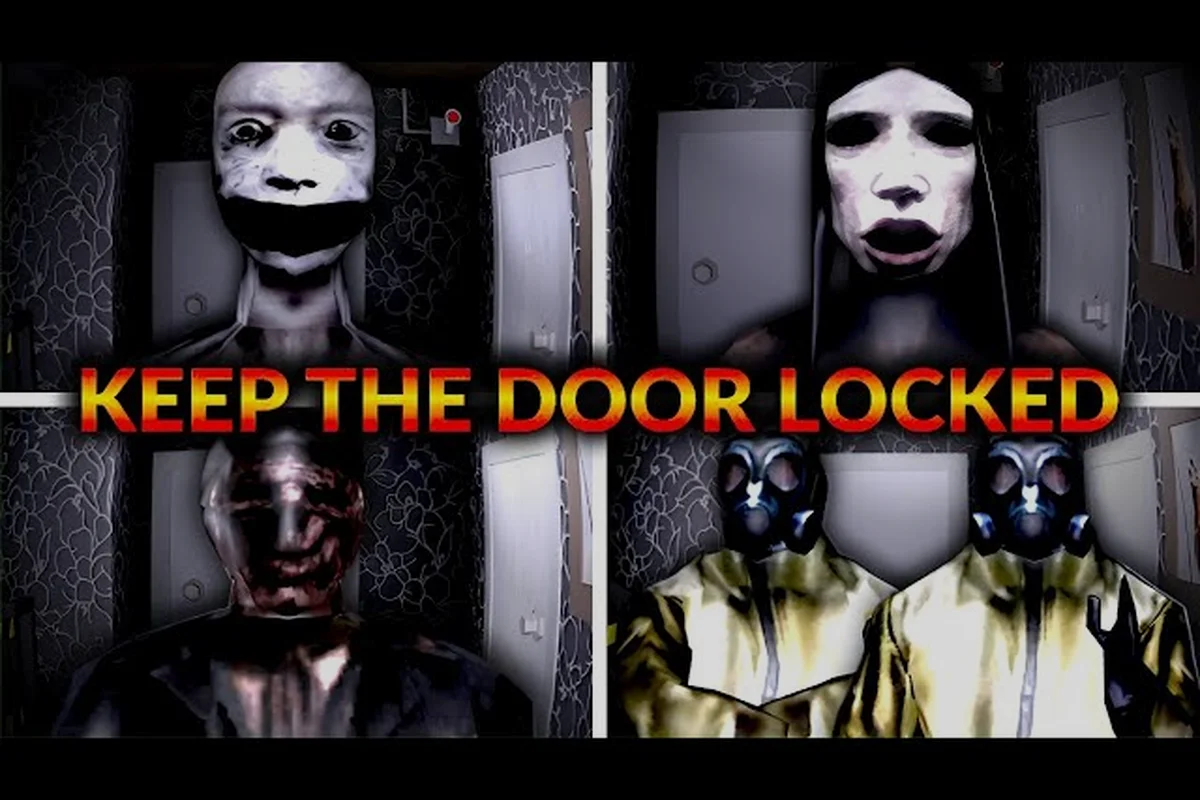
The keep the door locked first night is the steepest learning curve in this Roblox horror hit, and most new players die before 2 AM because they answer knocks without checking the monitor. Since the game launched on May 28, 2026, it has pulled in over 4.3 million visits with more than 10,000 players online at peak hours, which means the hallway outside your room is always crowded with both desperate survivors and something far worse. This guide walks you through exactly what to do from the moment the clock strikes midnight until sunrise, so you can stop guessing and start surviving.
Understanding the First Night Schedule
Your first shift in the hotel room follows a predictable rhythm, and knowing what happens when gives you a massive advantage over players who panic at every sound. The game's core loop is simple: strangers knock, you decide whether to open, and one wrong call ends your run instantly. According to community data from the official Roblox page, the first knock usually arrives within the first few minutes of the night, which catches many beginners off guard while they are still fiddling with the camera controls.
The night is divided into distinct phases, each with its own threat level and visitor pattern. Players who have completed multiple runs report that the early hours are quieter but more deceptive, while the later hours ramp up both the frequency and the aggression of the anomalies. Here is what the typical first night looks like based on player experiences shared across walkthrough videos:
| Time Window | Activity Level | Common Visitor Types | Recommended Action |
|---|---|---|---|
| 12:00 AM - 1:30 AM | Low | Single knockers, slow talkers | Stay on cameras, learn the hallway layout |
| 1:30 AM - 3:00 AM | Medium | Groups of two, urgent requests | Cross-check stories against camera feeds |
| 3:00 AM - 4:30 AM | High | Rapid knocking, aggressive voices | Keep door locked unless story is flawless |
| 4:30 AM - 6:00 AM | Critical | Final test, multiple anomalies | Trust your instincts, prioritize survival |
The key insight here is that the first night is designed to teach you pattern recognition rather than punish you for every mistake. The game gives you a few "free" mistakes early on, but the difficulty curve spikes dramatically after 3 AM, so you need to build good habits from the very first knock.
Reading the Monitor Before You Act
The monitor is your lifeline, and it sits on the desk to your left when you spawn. It cycles through cameras positioned around the hallway, the stairwell, and the lobby, and each feed updates in real time. Before you ever touch the door lock, you should spend at least ten seconds cycling through every available camera to establish a baseline of what the hallway looks like when it is empty.
Safe visitors follow logical stories that match the room they claim to be in, while anomalies contradict themselves or reference details that do not exist on the camera feed. For example, if someone says they are locked out of Room 204 but the camera shows Room 204's door wide open, that is an instant red flag. The night vision toggle on the monitor helps you spot details in dark corners, but it also drains your power meter, so use it sparingly and only when you need to confirm a specific detail.
Identifying Safe Visitors on Your First Night
Not every knock is a trap, and learning to separate the genuine guests from the anomalies is the core skill that carries you through the entire game. The keep the door locked walkthrough community has documented several consistent tells that separate safe visitors from threats, and these patterns hold true across multiple patches as of August 2026.
Safe visitors typically have a clear, specific story that matches what you see on the cameras. They might say they are from Room 203 and need help with a broken lock, and when you check the camera, you can see the door to Room 203 slightly ajar. They speak in complete sentences, they wait patiently for your response, and they do not pressure you to open the door quickly. Anomalies, by contrast, often repeat the same phrase, use vague language, or try to rush your decision.
| Visitor Behavior | Safe Indicator | Anomaly Indicator |
|---|---|---|
| Story consistency | Matches camera feed exactly | Contradicts visible evidence |
| Speech pattern | Natural, varied sentences | Repetitive, robotic phrases |
| Urgency level | Patient, allows time to check | Demands immediate opening |
| Physical description | Matches what camera shows | No match or impossible details |
| Response to questions | Answers directly and logically | Deflects or changes the subject |
The door lock toggle is your primary tool, and you should never feel pressured to open it. If a visitor fails even one of these checks, keep the door locked and wait for them to leave. The game does not punish you for refusing entry, but it absolutely punishes you for letting the wrong thing inside.
The Two-Knock Wait Protocol
Experienced players have developed a simple heuristic called the two-knock rule that works well for beginners. The first knock is always worth investigating because it is often a genuine guest who needs help. The second knock from the same visitor, however, should trigger immediate suspicion, because anomalies tend to double back and try again with a different story.
When you hear that second knock, cycle your cameras to see if the visitor is still standing in the same spot. If they have moved to a different door or disappeared entirely, that is a strong signal that they were never human. According to community reports, most anomalies give themselves away within the first thirty seconds of interaction, so patience is genuinely your best defense.
Essential First Night Strategies
Your goal on the first night is not to help everyone, it is to survive until 6 AM. That means you need to prioritize your own safety over every request that comes through the door, and you need to manage your resources carefully throughout the shift. The keep the door locked first night experience is fundamentally about information gathering, and every decision should flow from what you have actually observed rather than what you assume.
Start by memorizing the camera layout during the first quiet hour. There are typically four to five cameras available, and each one covers a different angle of the hotel. Knowing which camera shows which part of the hallway means you can quickly verify a visitor's story without wasting time cycling through every feed. This preparation pays off enormously when the knocking starts coming fast and furious after 3 AM.
-
Check all cameras at the start of the night to establish a baseline
-
Keep your power usage low during quiet periods to save it for critical checks
-
Never open the door without confirming the visitor's story on camera
-
Trust your gut when something feels wrong, even if you cannot articulate why
-
Track which rooms are occupied based on what visitors tell you
The night vision toggle is a finite resource, and burning through it early leaves you blind during the critical late-night hours. Use it only when you need to confirm a specific detail, like whether a visitor is actually standing where they claim to be, and turn it off as soon as you have your answer.
Managing Your Power Meter
Your power meter is the invisible clock that governs your night, and it drains every time you use the night vision or leave the monitor on for extended periods. If the power runs out, you lose access to the cameras entirely, which means you are making every door decision blind. That is a death sentence in the late hours when anomalies are at their most aggressive.
A smart power strategy is to keep the monitor off during quiet periods and only turn it on when you hear a knock. This conserves your reserves for the moments that actually matter, and it also forces you to listen carefully to the audio cues that precede each visitor. The game uses distinct sound effects for different types of visitors, and learning to recognize those audio cues by ear is a skill that pays dividends throughout your entire playthrough.
Common First Night Mistakes
Every player makes mistakes on their first night, but the ones who survive are the ones who learn from them quickly. The keep the door locked wiki community has cataloged the most common fatal errors, and almost all of them stem from the same root cause: acting before gathering enough information. When you hear a knock, your instinct is to respond, but the game rewards the opposite approach.
The most common mistake is opening the door for a visitor who tells a sad story. Anomalies are designed to be manipulative, and they will say anything to get you to unlock that door. A visitor who claims to be a lost child, an injured guest, or a hotel employee who forgot their key is statistically more likely to be an anomaly than a genuine guest, because the game knows those stories trigger your empathy.
| Mistake | Why It Happens | How to Avoid It |
|---|---|---|
| Opening without camera check | Panic response to knocking | Force yourself to check monitor first |
| Trusting emotional stories | Anomalies exploit empathy | Treat every story with equal suspicion |
| Wasting night vision early | Curiosity about dark corners | Save power for verification checks |
| Ignoring audio cues | Focusing only on visuals | Learn the sound patterns for each visitor |
| Answering rapid knocks | Fear of missing a real guest | Rapid knocking is almost always an anomaly |
Another frequent error is spending too much time on a single visitor. If someone is knocking and you cannot verify their story within thirty seconds, the safest play is to keep the door locked and move on. The game does not give you bonus points for helping every guest, and the risk of opening the door for an unverified visitor is simply not worth the reward.
What to Do When You Make a Mistake
Even the best players let an anomaly through occasionally, and the game is designed to be forgiving enough that one mistake does not necessarily end your run. If you realize you have opened the door for something that is not human, your priority shifts immediately from helping to surviving. Back away from the door, keep your eyes on the monitor, and look for an escape route.
Some players report that certain anomalies can be outrun or outlasted, while others require you to survive until 6 AM regardless of what is in the room with you. The exact mechanics vary depending on which anomaly you let in, and the community is still documenting the full roster as of August 2026. Your best bet is to stay calm, keep moving, and remember that the night always ends eventually.
Advanced Tips for Your Second Night
Once you have survived your first night, you will have a much better sense of the game's rhythm and expectations. The keep the door locked walkthrough videos on YouTube show that experienced players develop a near-instinctive sense for which visitors are safe, and that instinct comes from pattern recognition built over multiple runs. Your second night should be about refining your approach rather than relearning the basics.
Start paying attention to the specific anomalies you encounter and note their tells. Each anomaly type has its own quirks, and learning to identify them at a glance makes the entire game significantly easier. The community has documented several distinct anomaly types, and knowing their behaviors is the difference between a confident survival and a panicked death.
-
Track which visitors you let in and which you turned away, then review your decisions
-
Experiment with different power management strategies to find what works for you
-
Learn the audio cues for each anomaly type by listening carefully during encounters
-
Practice cycling cameras quickly so you can verify stories in under ten seconds
-
Share your findings with the community to help other players survive their first night
The game rewards careful observation and punishes reckless action, so every run is an opportunity to build your knowledge base. Players who take notes on their encounters tend to improve much faster than those who simply react to each knock without reflection.
Building Your Personal Rulebook
After a few nights, you will start to develop your own set of rules based on what you have observed. Maybe you have learned that visitors who knock twice in quick succession are always anomalies, or that a specific camera angle always shows the truth. These personal rules are valuable because they are grounded in your actual experience rather than generic advice.
Write down your rules after each run and test them on subsequent nights. If a rule holds up across multiple encounters, keep it. If it fails, revise it. This iterative process is how the best players in the community developed their strategies, and it is the most reliable path to mastery in Keep the Door Locked. For a broader overview of the game's mechanics, check out the complete Keep the Door Locked guide that covers everything from spawn room layout to advanced anomaly identification.
Frequently Asked Questions
How long does the first night last in Keep the Door Locked?
The first night runs from 12:00 AM to 6:00 AM, which translates to roughly 10 to 15 minutes of real time depending on how many visitors knock and how long you spend verifying each one. The game does not have a pause function, so plan your bathroom breaks between runs rather than during them.
What happens if I let an anomaly into my room?
The consequences vary depending on which anomaly you let in, but none of them are good. Some anomalies will attack you immediately, while others will stalk you through the room and trigger a jumpscare when you least expect it. Your only goal after letting one in is to survive until 6 AM, which is possible but difficult.
Can I survive the first night without opening the door at all?
Yes, you can absolutely keep the door locked all night and survive, because the game never forces you to open the door. However, you will miss out on the rewards and story progression that come from helping genuine guests, and some players report that the game becomes more aggressive on subsequent nights if you never help anyone.
Is there a way to tell safe visitors from anomalies without the camera?
The audio cues are your best secondary tool. Safe visitors tend to have natural, varied speech patterns with pauses and hesitations, while anomalies often speak in a flat, repetitive tone. Some anomalies also have distinct sound effects when they knock, which you can learn to recognize with practice.
What should I do if my power runs out during the first night?
If your power runs out, lock the door and stay put for the rest of the night. Without the monitor, you must rely solely on audio cues, making any other action too risky. Keep the door locked until morning, as opening it could be fatal.