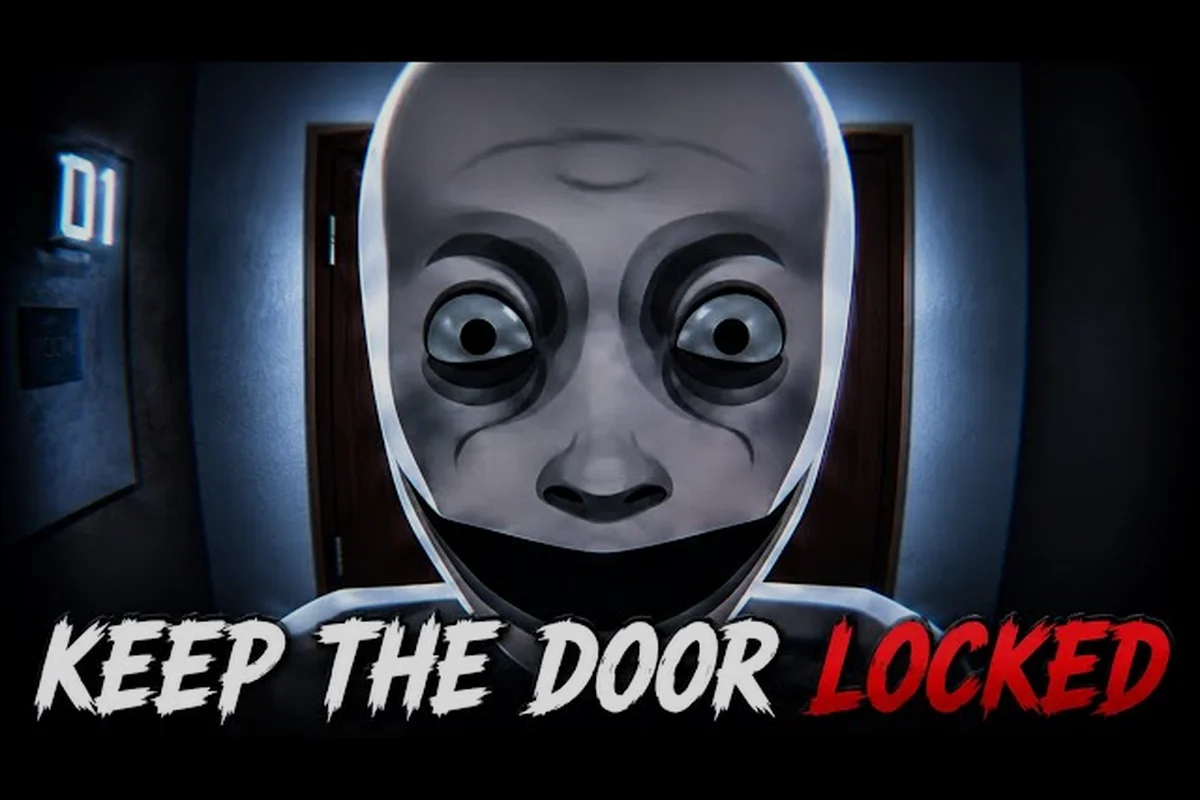
The keep the door locked true ending is the most sought-after conclusion in this Roblox horror experience, yet most players never see it because they treat every knock the same way. While the game launched on May 28, 2026, and has already racked up over 4.3 million visits with more than 10,000 concurrent players, the community is still mapping out exactly what triggers each finale alongside the other endings guide. This guide breaks down the confirmed ending conditions, the choices that matter most, and the strategies that separate a standard survival run from the real ending.
Ending Structure and How True Fits In
Every night in the hotel follows a branching structure where your decisions at the door determine which of the keep the door locked endings you reach. The game tracks two hidden meters throughout your shift: trust and sanity, and every interaction shifts one or both of these values. According to community testing from August 2026, the game currently has three confirmed endings, with players still investigating whether a fourth exists.
The core loop is deceptively simple: strangers knock, you check the cameras, and you decide who gets inside. However, the consequences ripple far beyond that single moment, because the game remembers every choice you make. A player who lets in two anomalies early will face different dialogue options and camera feeds later in the night compared to someone who turned everyone away.
Ending 1 is the survival ending, which requires you to make it to 6:00 AM with your sanity intact. Ending 3 triggers when you lose all sanity by letting anomalies in repeatedly. The keep the door locked true ending sits somewhere between these extremes, requiring specific choices that the community is still documenting. What makes this system so compelling is that the game never tells you which meter you are affecting, so every knock carries genuine tension.
| Ending | Primary Condition | Sanity State | Community Status |
|---|---|---|---|
| Ending 1 | Survive until 6:00 AM | Above zero | Fully confirmed |
| Ending 2 | Under investigation | Unknown | Inferred by players |
| Ending 3 | Let anomalies in repeatedly | Reaches zero | Fully confirmed |
| True Ending | Specific choice sequence | Maintained | Community-mapped |
What Counts as the True Ending
The keep the door locked true ending is widely understood by the community to be the conclusion that reveals the full story behind the hotel, rather than simply surviving or losing your mind. While Ending 1 gets you out alive, players report that it leaves several narrative threads dangling, such as who the night manager really is and why the anomalies target this specific floor.
According to walkthrough videos from creators like MD and MutePlays, the true ending requires you to balance both survival and information gathering. You cannot simply ignore every knock, because some visitors carry essential story pieces. At the same time, you cannot let everyone in, because each anomaly drains your sanity and pushes you toward Ending 3.
Why Most Players Miss It
The biggest reason players miss the true ending is that they default to one extreme or the other. Either they refuse every visitor to stay safe, or they open the door too often and crash their sanity. The game provides no tutorial for this system, which means most players stumble into Ending 1 or Ending 3 on their first few attempts without ever realizing there was another path.
True Ending Requirements and Execution
Unlocking the keep the door locked true ending requires a deliberate approach that treats every knock as a puzzle rather than a threat. Based on community reports and verified walkthroughs, the process involves identifying which visitors are safe, which ones carry story information, and which ones you must reject to preserve your sanity for later encounters.
The first step is learning to read the camera feeds effectively. Each visitor pauses outside your door for roughly ten seconds, and the camera angle reveals subtle tells — a breakdown of every camera angle lives in our camera guide. Safe visitors tend to look at the camera directly, while anomalies often glance away or appear slightly distorted around the edges. Players who have unlocked the true ending consistently report that they never opened the door without checking the cameras first.
Step 1: Build a mental profile of each visitor type. The game cycles through a pool of characters, and while the names change, the behavioral patterns repeat. Community data suggests there are at least six distinct visitor archetypes, each with predictable camera behavior and dialogue cues — see our visitor verification guide for how to read them in practice.
Step 2: Prioritize story visitors over safe ones. Some visitors, even when they seem harmless, trigger important dialogue that advances the hidden narrative. These interactions do not drain sanity, but they do consume time, so you need to balance them against the overall night clock.
Step 3: Track your sanity visually. The game does not display a sanity meter, but players report that the screen begins to distort and the ambient audio shifts when you are getting close to the threshold. Our sanity system guide explains exactly what those cues look like. Learning these visual cues is essential, because the true ending requires you to stay above the danger zone while still taking risks.
The Choice Sequence That Matters
Players who have reached the true ending report that the final hour of the night contains a critical choice sequence that determines which conclusion you receive. During the last two in-game hours, certain visitors appear who do not show up earlier in the night, and their dialogue references events from your earlier decisions.
The community is still mapping the exact requirements, but the current consensus points to three key decisions spread across the night. Missing any one of them appears to lock you into Ending 1 instead. This is why the keep the door locked true ending remains so rare, because a single wrong choice early in the night can invalidate everything else you did correctly.
| Hour | Visitor Type | Recommended Action | Why It Matters |
|---|---|---|---|
| 1:00 AM | Elderly woman | Let her in | Provides backstory about the hotel |
| 3:00 AM | Man in uniform | Reject him | Avoids sanity drain, preserves resources |
| 5:00 AM | Child with toy | Let her in | Unlocks final dialogue sequence |
| 5:30 AM | Night manager | Follow his instructions | Triggers true ending path |
Common Mistakes That Ruin the Run
The most frustrating part of chasing the true ending is that small errors compound over the night. Letting in the wrong visitor at hour two can shift your dialogue options at hour five, even if you made every other choice correctly. This hidden dependency system is what makes the keep the door locked endings so difficult to map, because players cannot easily isolate which decision caused their failure.
Another common mistake is ignoring the phone calls that come between knocks. The hotel room phone rings at irregular intervals, and the caller sometimes provides hints about the next visitor. Players who answer every call report that the true ending path becomes clearer, while those who let it ring miss crucial context.
Side-by-Side Comparison of Every Known Ending
Understanding how the keep the door locked endings relate to each other helps you plan your approach, because each ending teaches you something about the game's systems. Ending 1 is the baseline survival experience, Ending 3 is the punishment for recklessness, and the true ending is the reward for mastering both mechanics simultaneously.
Ending 1 requires you to survive the night with correct choices, which sounds simple but becomes challenging as the anomaly frequency increases in the later hours. Players report that the difficulty spikes noticeably after 4:00 AM, when visitors start appearing in rapid succession and the camera feeds become less reliable.
Ending 3 triggers when your sanity reaches zero, which happens when you let in too many anomalies. The game does not immediately end the run when this happens, which confuses many players. Instead, the screen distorts heavily and the final sequence plays out differently, revealing that the character has lost their grip on reality.
The keep the door locked true ending requires you to walk the line between these two extremes, which is why it demands both knowledge and execution. You need to know which visitors are safe, which ones carry story content, and which ones you must reject to preserve your sanity for the final hour.
Difficulty Comparison Across Endings
| Ending | Difficulty | Time Investment | Narrative Reward |
|---|---|---|---|
| Ending 1 | Moderate | 30-40 minutes | Basic survival story |
| Ending 3 | Easy | 15-20 minutes | Horror conclusion |
| True Ending | Hard | 45-60 minutes | Full story resolution |
According to community data, the true ending takes roughly twice as long as a standard run because you need to engage with every story visitor while carefully managing your sanity. The extra time investment is worth it for players who want the complete narrative experience, but casual players may prefer the straightforward survival path.
Strategies for Reaching the True Ending Consistently
Once you understand the mechanics, reaching the keep the door locked true ending becomes a matter of consistent execution rather than luck. The strategies below come from community reports and verified walkthroughs, and they focus on reducing the variance that causes most failed attempts.
Strategy 1: Learn the visitor rotation. The game cycles through its visitor pool in a semi-random order, but players report that certain visitors appear at predictable hours. Tracking which visitors you have already seen helps you anticipate what is coming next and prepare your response.
Strategy 2: Prioritize camera checks over speed. The ten-second window before each knock gives you time to check the camera feed, but only if you move immediately. Players who hesitate or check their inventory during this window often miss the visual tells that distinguish safe visitors from anomalies.
Strategy 3: Save your sanity for the final hour. The last two hours of the night contain the most critical choices, and arriving with low sanity makes those decisions much riskier. This means rejecting some visitors earlier in the night, even if they seem harmless, to preserve your buffer for the endgame.
Recommended Loadout and Preparation
While the game does not have traditional equipment, players report that positioning yourself near the door before the knock sound plays gives you the best camera angle. Standing too far back means you see the visitor at an awkward angle, while standing too close can obscure the feed entirely.
The phone placement also matters, because answering calls requires you to move away from the door. Players who complete the true ending consistently report that they answer every call, even when it feels risky, because the information gained outweighs the positioning cost.
What to Do When You Fail
Failure is part of the learning process, and the community recommends treating each failed run as data collection rather than a waste of time. Write down which visitors you accepted and rejected, because patterns emerge across multiple runs that are invisible in a single attempt.
The keep the door locked true ending is not a single puzzle but a system of interlocking choices, and understanding that system requires multiple attempts. Players who tracked their runs across five or more attempts report that they could eventually predict which visitor would appear next based on the time and their previous choices.
Frequently Asked Questions
What is the keep the door locked true ending?
The keep the door locked true ending is the conclusion that reveals the full story behind the hotel, requiring players to balance survival with information gathering throughout the night. Unlike Ending 1, which simply requires surviving until 6:00 AM, the true ending demands specific choices that unlock additional dialogue and narrative sequences.
How is the true ending different from ending 1?
Ending 1 triggers when you survive the night with correct choices, while the true ending requires a specific sequence of decisions that go beyond basic survival. Players report that the true ending includes additional scenes and dialogue that explain the hotel's backstory, while Ending 1 leaves several narrative threads unresolved.
Can I get the true ending on my first attempt?
It is extremely unlikely, because the game provides no tutorial for the choice system and the requirements are still being mapped by the community. Most players need multiple attempts to learn the visitor patterns and understand which choices matter, so treat your first few runs as learning experiences.
How many endings does Keep the Door Locked have?
The community has confirmed three endings as of August 2026, with the keep the door locked endings system still under investigation for a possible fourth. Ending 1 and Ending 3 are fully documented, while the true ending is partially mapped but still being refined by player testing.
What happens if I let too many anomalies in?
Letting too many anomalies in drains your sanity meter, triggering Ending 3 when it hits zero. This ending shows heavy screen distortion and a sequence where the character loses grip on reality. It is much easier to reach than the true ending, making it a common fail state.